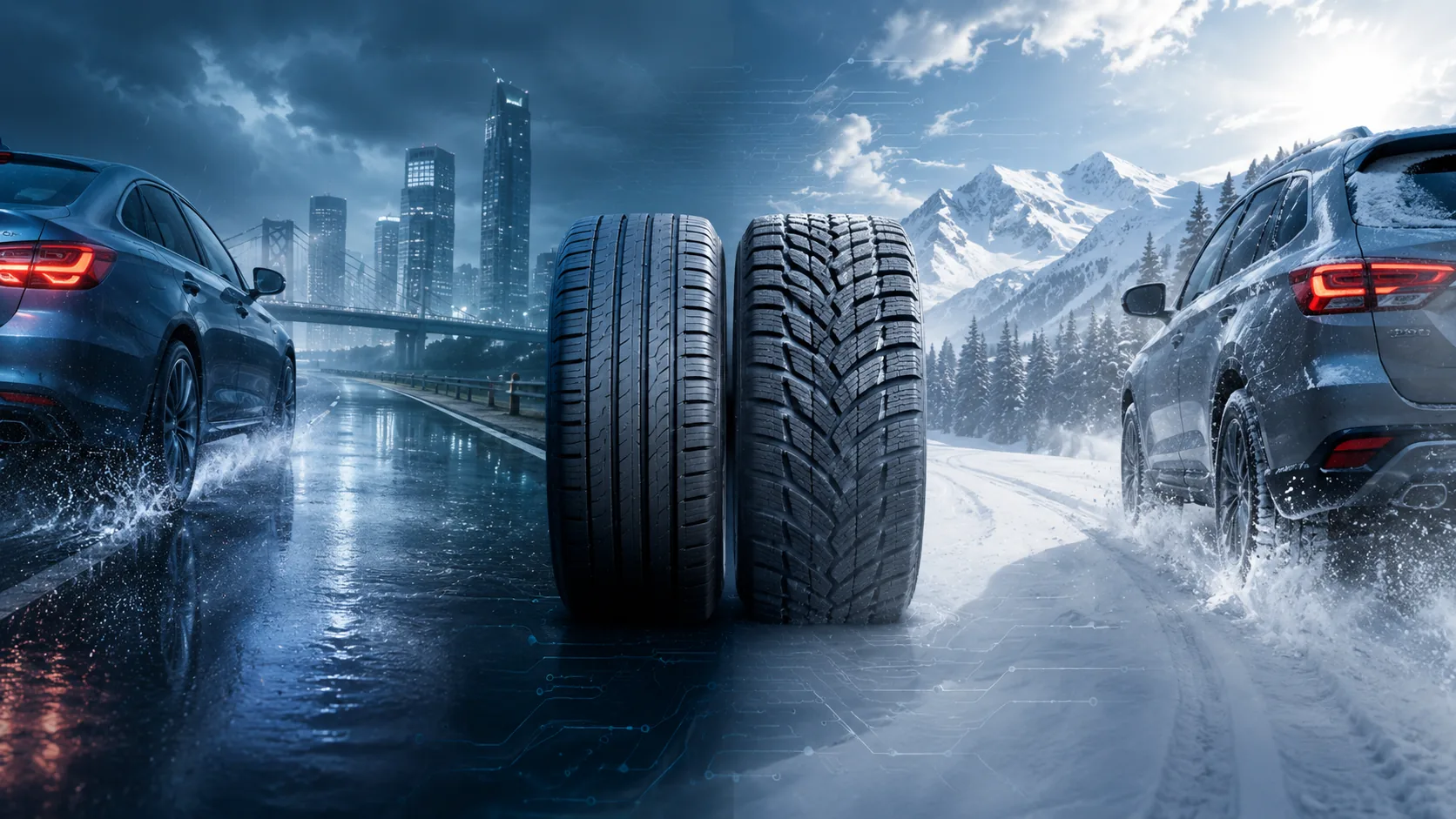
Port Coquitlam sits at the foot of the mountains, and while the Lower Mainland doesn't get the sustained cold of the Interior, our winters are unpredictable — wet roads, occasional snow, freezing temperatures overnight, and the frequent trips up to Cypress, Seymour, or the Sea to Sky corridor where winter tires are legally required. Here's what Tri-Cities drivers actually need to know.
BC Winter Tire Laws: The Basics
BC requires winter tires or chains on designated highways from October 1 to April 30. This includes most mountain passes and many routes in the Sea to Sky, Fraser Canyon, and Interior. Specific requirements:
- Tires must display the mountain/snowflake symbol (3PMSF) or M+S rating, or you must carry chains
- Tread depth must be at least 3.5 mm
- Fines for non-compliance can reach $121, and you can be turned back
- If you tow, your trailer tires may also need to comply depending on the route
Even in Port Coquitlam itself, winter tires provide meaningful safety benefits on wet and cold roads, even when there's no snow on the ground.
All-Season vs All-Weather vs Winter: What's the Difference?
All-Season Tires
All-season tires are a compromise — decent in rain, acceptable in mild cold, but not designed for snow or temperatures consistently below 7°C. The rubber compound hardens in the cold, reducing grip. They typically display an M+S rating but not the mountain/snowflake symbol. They're fine for the Lower Mainland if you never leave for the mountains, but they're not winter tires in any meaningful sense.
All-Weather Tires
All-weather tires are a genuine year-round option that carry the 3PMSF mountain/snowflake symbol. They're certified for winter use, perform well in rain and light snow, and you can leave them on all year without swapping. The trade-off: they don't match a dedicated winter tire in deep snow or sustained cold. For most Lower Mainland drivers who rarely encounter severe winter conditions, all-weather tires are an excellent practical choice — one set, no seasonal swaps, and legal for BC winter highways.
The Goodyear Assurance WeatherReady 2 is a strong all-weather option we frequently recommend to Tri-Cities drivers.
Dedicated Winter Tires
If you regularly drive to Whistler, Manning Park, or Kelowna in winter, dedicated winter tires are the right choice. They use a softer compound that stays pliable in extreme cold and tread patterns optimized for snow and ice. The trade-off: they wear faster in warm temperatures, so you swap them on in October and off in April.
The Goodyear WinterCommand Ultra is our top recommendation for dedicated winter use in the Tri-Cities.
What About EV Winter Tires?
EVs present a specific winter tire challenge: they're heavy, which increases the load on tires, and their range drops significantly in cold weather. EV-specific winter tires are built with higher load ratings and compounds that balance cold-weather grip with energy efficiency to minimize range loss. If you drive an EV, ask us specifically about EV-rated winter or all-weather options — not every tire is suitable.
See our EV Tire Service page for more detail.
When to Switch
The rule of thumb: when temperatures are consistently below 7°C, all-season tires start losing their grip advantage. In Port Coquitlam, that typically means mid-October through March. Don't wait for snow — the compound performance matters more than surface conditions.
Mounting, Balancing & Storage
When you come in for a seasonal tire swap at Blue Mountain AutoPro, we mount, balance, torque to spec, and check your TPMS sensors. We can also store your off-season tires if you don't have space at home — ask about our tire storage program.