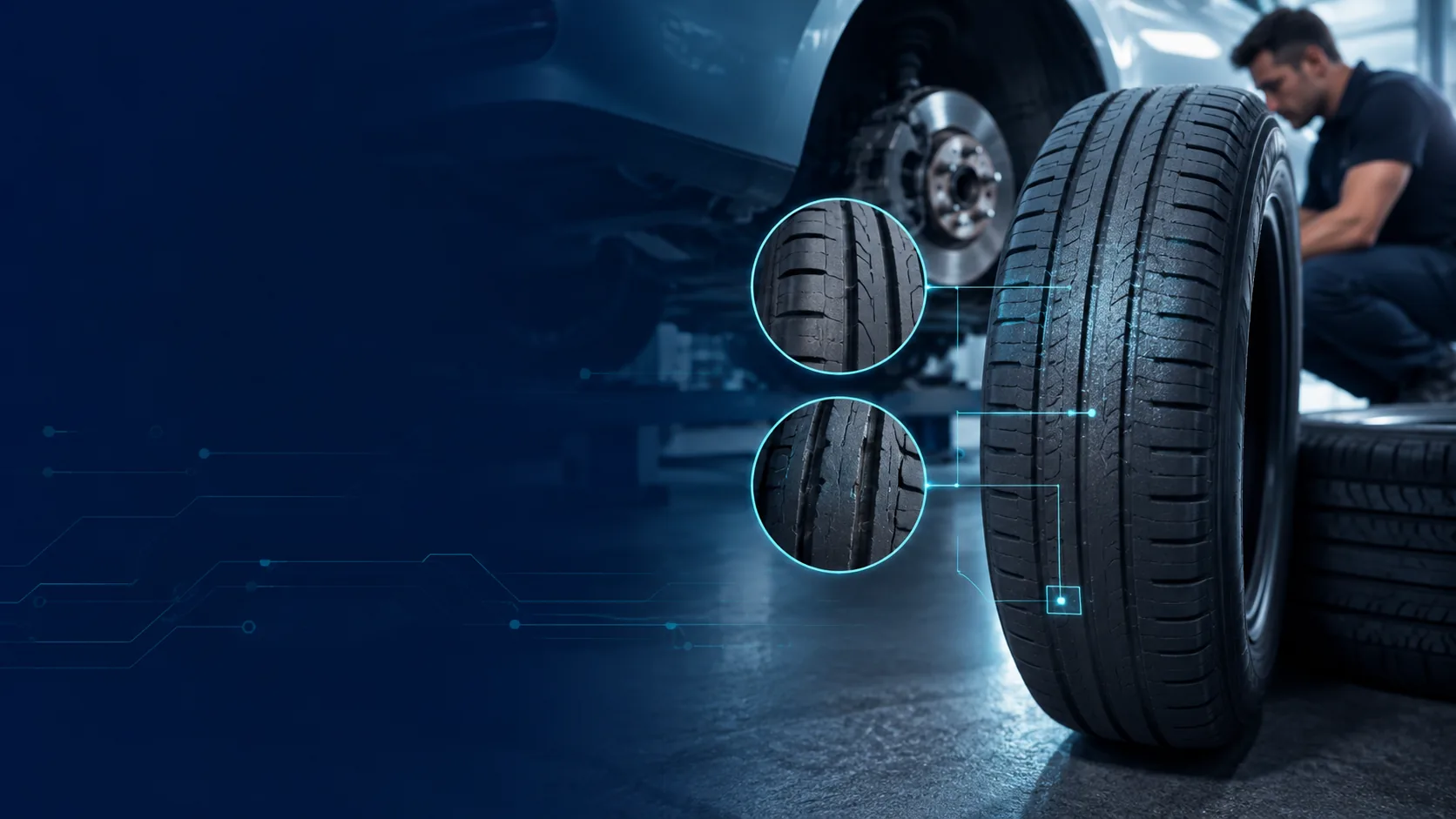
If you drive an EV in Port Coquitlam or anywhere in the Tri-Cities, you've probably noticed your tires wearing faster than you expected — or heard from other EV owners that tire costs are surprisingly high. There are two main reasons: weight and torque. Here's what's actually happening and how to manage it.
Why EVs Are Harder on Tires
Most electric vehicles weigh significantly more than comparable gas-powered models. A Tesla Model Y Long Range weighs around 2,100 kg — roughly 300–400 kg more than a similarly sized gas SUV. That extra weight is almost entirely the battery pack sitting low in the floor, and it presses down on four contact patches every kilometre you drive.
The second factor is torque delivery. An electric motor produces maximum torque instantly from a standstill — there's no rev curve, no transmission shift, no gradual ramp-up. Every time you accelerate, your tires have to manage that load immediately. On a gas car, that force builds gradually. On an EV, it arrives all at once.
The result: EV tires can wear 20–30% faster than the same tire on a comparable gas vehicle under the same driving conditions.
What This Means for Tri-Cities EV Drivers
For most drivers in Port Coquitlam, Coquitlam, and Port Moody, this means two practical things:
- Rotate your tires more often. Where a gas car typically needs rotation every 12,000–15,000 km, Tesla officially recommends every 10,000–12,000 km. For some high-torque EVs, 8,000 km intervals make sense depending on wear patterns.
- Check tread depth proactively. Don't wait for the wear indicators. Many EV owners are surprised to find their tires at replacement depth well before they expected, especially on rear-biased or rear-wheel-drive models where rear tires take the brunt of acceleration forces.
Do You Need EV-Rated Tires?
Not strictly required — but EV-rated tires are genuinely better suited to how EVs drive. They're built with:
- Higher load ratings to handle battery weight without compromising handling
- Lower rolling resistance compounds that help preserve range
- Foam or resonance-dampening layers inside the tire to reduce road noise (which is much more noticeable in a quiet EV cabin)
- Reinforced sidewalls to maintain stability under instant torque loads
Goodyear's EV-specific lineup — including the ElectricDrive range — is purpose-built for these demands. As an authorized Goodyear dealer in Port Coquitlam, we can help you find the right tire for your specific EV model and driving habits.
The Noise Factor
One thing most EV owners don't anticipate: tires are suddenly the loudest thing in the cabin. Without an engine drowning out road noise, every hum, drone, and thump is amplified. When your tires start to wear unevenly — which is more common on EVs due to torque distribution — that noise gets noticeably worse. Staying on top of rotation intervals prevents the kind of uneven wear that creates noise and shortens tire life further.
What to Watch For
- Rear tires wearing significantly faster than fronts on RWD models
- Feathering or cupping on any axle — sign of rotation intervals that are too long
- Increased road noise, especially at highway speed
- Vibration through the steering wheel at speed
- Tread depth below 4/32" — especially important heading into a BC winter
Book a Tire Inspection at Blue Mountain AutoPro
We're a NexDrive-certified EV service centre and an authorized Goodyear tire dealer in Port Coquitlam. If you're not sure about the state of your EV's tires, bring it in — we'll check tread depth, wear patterns, and rotation needs at no charge as part of any service visit.