Battery Diagnostics

EV Battery Health & Diagnostics

Your battery is your EV's most valuable component. We assess its state-of-health, identify degradation, and give you a complete picture of your battery's condition and remaining life.

Know Your Battery's True Condition

All lithium-ion batteries degrade over time — but the rate of degradation varies significantly by chemistry, usage patterns, charging habits, and thermal management. A battery showing 80% state-of-health may have years of reliable service ahead; one showing 70% with cell imbalance may be causing range anxiety and reduced performance today.

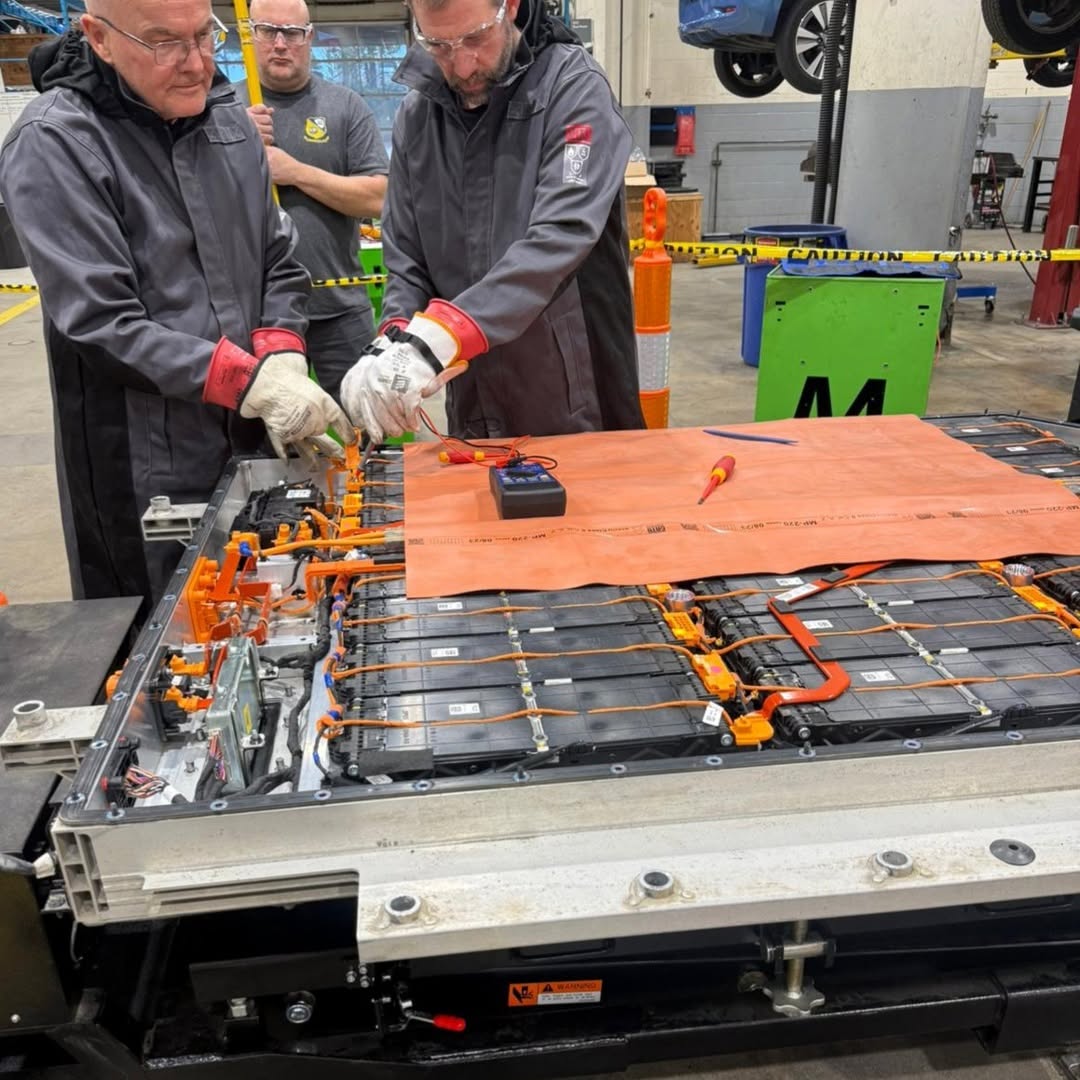
Our battery diagnostics go beyond what the vehicle's dashboard tells you — we connect with professional EV diagnostic tools to read live cell voltage data, measure capacity, and assess the thermal management system.

Our Battery Assessment Includes:

  • State-of-health (SOH) measurement
  • State-of-charge (SOC) accuracy check
  • Individual cell voltage balance analysis
  • Battery capacity test vs. rated specification
  • Thermal management system inspection
  • Coolant level and condition (liquid-cooled systems)
  • Battery fault code scan (all modules)
  • Charge port and BMS communication test
Book Battery Diagnostic

State-of-Health Report

We deliver a clear SOH percentage and capacity figure — plus context on what that means for your specific vehicle. Know whether your battery is performing as expected for its age and mileage.

Cell Balance Analysis

Individual cell imbalance is one of the leading causes of reduced range and premature capacity loss. We measure voltage spread across the entire pack to identify cells pulling the rest down.

Thermal System Check

Battery temperature management is critical to longevity. We inspect the liquid cooling circuit, fan-based systems, or heat pump integration — and check for coolant leaks, blockages, and sensor faults.

Pre-Purchase Inspection

Buying a used EV? A battery diagnostic before purchase is essential. We give you an unbiased assessment of the battery's true condition — not just the number on the seller's dashboard.

Battery Questions Answered

How much range loss is normal?
Most EVs lose 2–3% of battery capacity per year under normal use. After 5 years, 85–90% state-of-health is typical and still very usable. Accelerated degradation (below 80% in under 5 years) may indicate a thermal management issue, cell imbalance, or consistently deep discharge and fast-charge habits.
What causes faster battery degradation?
The main factors are: frequent DC fast charging (especially above 80% SOC), regularly charging to 100% and/or discharging below 10%, prolonged storage at high or low charge states, operating in extreme heat without proper thermal management, and cell imbalance that goes unaddressed.
Can EV batteries be repaired or replaced?
It depends on the make and the fault. Some battery issues — such as a failed module or BMS fault — can be repaired without replacing the entire pack. Full battery pack replacement is available on most models but is expensive. We'll advise you on the most cost-effective path based on the diagnostic findings.
Should I get a battery diagnostic before buying a used EV?
Absolutely. A used EV battery diagnostic is one of the most important inspections you can do before purchasing. The dashboard SOC estimate is not an accurate measure of degradation — only a proper diagnostic tool reading cell data can give you the true picture. We offer pre-purchase battery assessments for all makes.

Book Your Battery Assessment

Whether you're concerned about range loss, planning to buy a used EV, or just want peace of mind — our battery diagnostic gives you the full picture. Eligible repairs using NAPA parts are backed by the NAPA Peace of Mind Warranty (3 yr / 60,000 km).

Book Battery Diagnostic 604-939-8341